Recruitment has become increasingly complex as companies manage growing applicant volumes, specialized skill requirements and multiple interview stages. Traditional hiring processes often involve manual resume screening, repetitive candidate evaluations, disconnected assessment tools and lengthy decision-making cycles. These challenges can make it difficult for recruitment teams to identify suitable candidates efficiently.
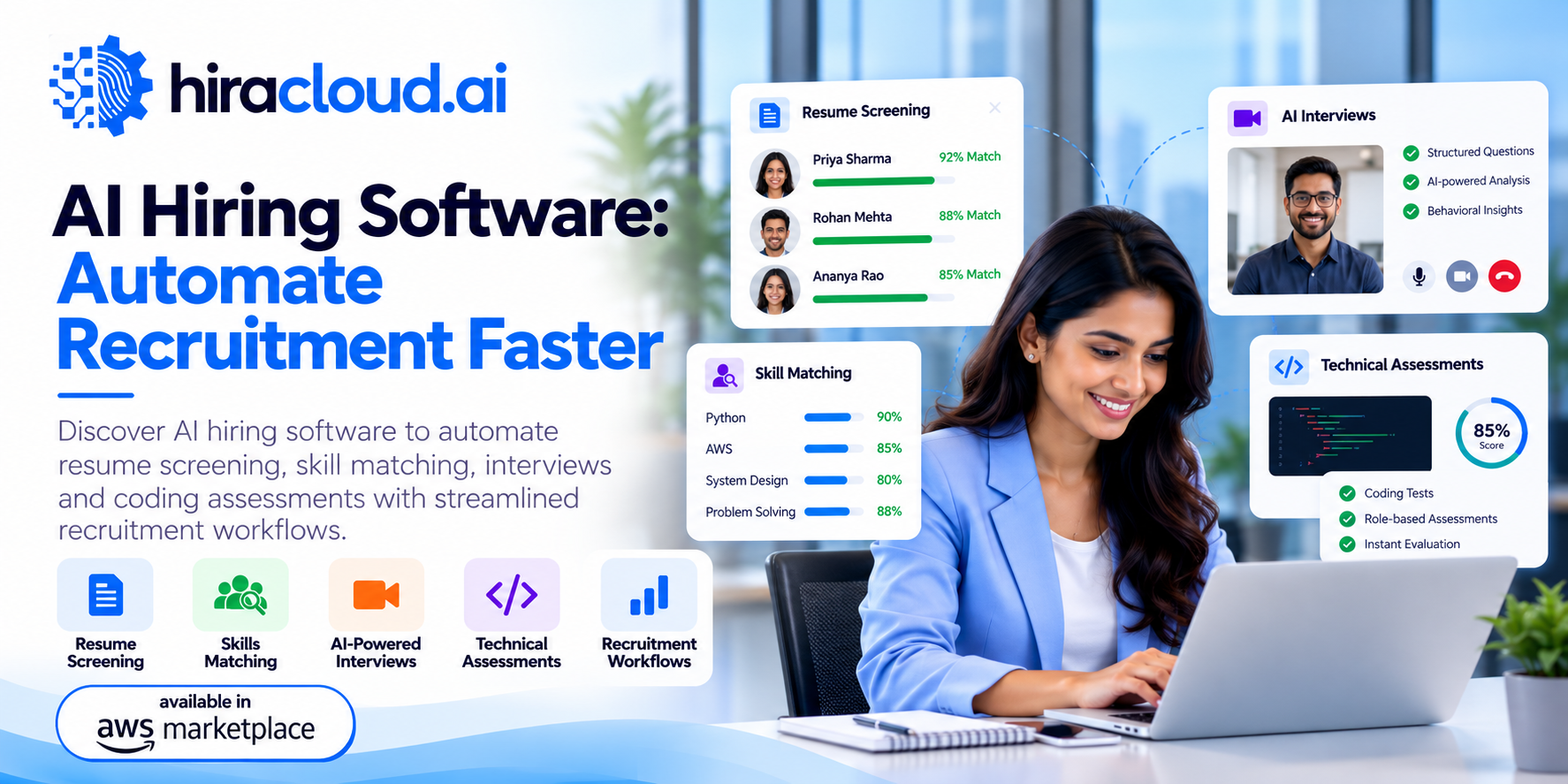
AI hiring software helps organizations streamline recruitment by supporting resume analysis, candidate-to-job skill matching, AI-powered interviews, technical assessments and candidate evaluation within connected workflows. By reducing repetitive administrative tasks and organizing candidate information, AI-powered hiring solutions can help recruiters focus on evaluating talent and making informed hiring decisions.
For organizations hiring across multiple departments, technical teams and Global Capability Centers (GCCs), recruitment automation can also support more consistent assessment processes and scalable hiring operations.
Explore the HiraCloud AI hiring platform to see how intelligent automation and connected workflows empower enterprise technical recruitment.
What Is AI Hiring Software?
AI hiring software is a recruitment technology solution that uses artificial intelligence to support activities such as candidate screening, skills matching, interviews, assessments and recruitment workflow management.
Unlike traditional hiring processes that rely heavily on manual review, AI hiring tools can help recruiters organize candidate information, compare qualifications with job requirements and coordinate different stages of recruitment.
Depending on the platform, these capabilities may include:
- Resume screening: Analyze candidate resumes against job descriptions and role requirements.
- Skills matching: Compare candidate skills and experience with the competencies required for a position.
- AI-powered interviews: Support structured interviews and organize candidate responses for review.
- Technical assessments: Incorporate coding exercises and role-specific evaluations into recruitment workflows.
- Candidate evaluation: Consolidate information from different assessment stages to support recruiter decisions.
AI hiring software does not necessarily automate every recruitment activity. Its capabilities depend on the platform, integrations, configured workflows and level of human oversight.
Learn more about the capabilities, benefits and applications of an AI recruitment platform in modern enterprise hiring.
Why Is AI Hiring Software Important for Businesses?
Organizations need recruitment processes that can accommodate changing workforce requirements without creating unnecessary administrative work. AI hiring software can support this objective in several ways.
Reduce Manual Recruitment Work
Recruiters frequently spend time reviewing resumes, organizing candidate information, coordinating assessments and preparing evaluation summaries. AI-assisted workflows can help organize these activities and reduce repetitive tasks.
This allows recruitment teams to dedicate more attention to candidate communication, interview discussions and hiring manager collaboration.
Improve Candidate-to-Job Matching
A candidate's job title does not always reflect their actual technical capabilities. AI hiring tools can compare skills, qualifications and experience with specific job requirements, helping recruiters identify potentially relevant candidates.
Skills-based matching can be particularly useful when hiring for software engineering, cloud computing, cybersecurity, data analytics and other specialized positions.
Support Consistent Candidate Evaluation
When different interviewers use different assessment criteria, comparing candidates can become difficult. Structured evaluation workflows help teams apply relevant criteria consistently and review evidence from multiple recruitment stages.
Recruiters should still examine assessment results and consider relevant candidate context before making decisions.
Scale Recruitment Operations
Companies expanding into new markets or building large technical teams may need to manage many vacancies simultaneously. Connected recruitment workflows can help teams coordinate candidate screening, interviews and assessments across multiple roles.
Organize Recruitment Information
When candidate information is spread across spreadsheets, emails and separate assessment platforms, recruiters may struggle to maintain a complete view of the hiring process. Integrated recruitment technology can help bring relevant information together for review.
Key Recruitment Challenges AI Hiring Tools Can Address
Before implementing recruitment automation, organizations should understand the problems affecting their existing hiring processes.
High application volumes
Reviewing large numbers of applications manually can consume significant recruiter time.
Difficulty identifying relevant skills
Similar resumes and job titles may represent different levels of expertise. Recruiters need role-specific criteria to assess candidate suitability.
Lengthy assessment processes
Multiple interviews, technical tests and manual coordination can create delays between recruitment stages.
Inconsistent interview evaluations
Different interviewers may interpret candidate responses differently when structured evaluation criteria are missing.
Disconnected hiring systems
Separate tools for screening, interviews and assessments can make it difficult to consolidate candidate information.
Limited recruitment scalability
Increasing hiring demand can place pressure on recruitment teams, particularly when specialized technical positions require several evaluation stages.
Addressing these challenges requires a clear recruitment process, appropriate technology and defined responsibilities for recruiters and hiring managers.
How to Automate Recruitment With AI Hiring Software
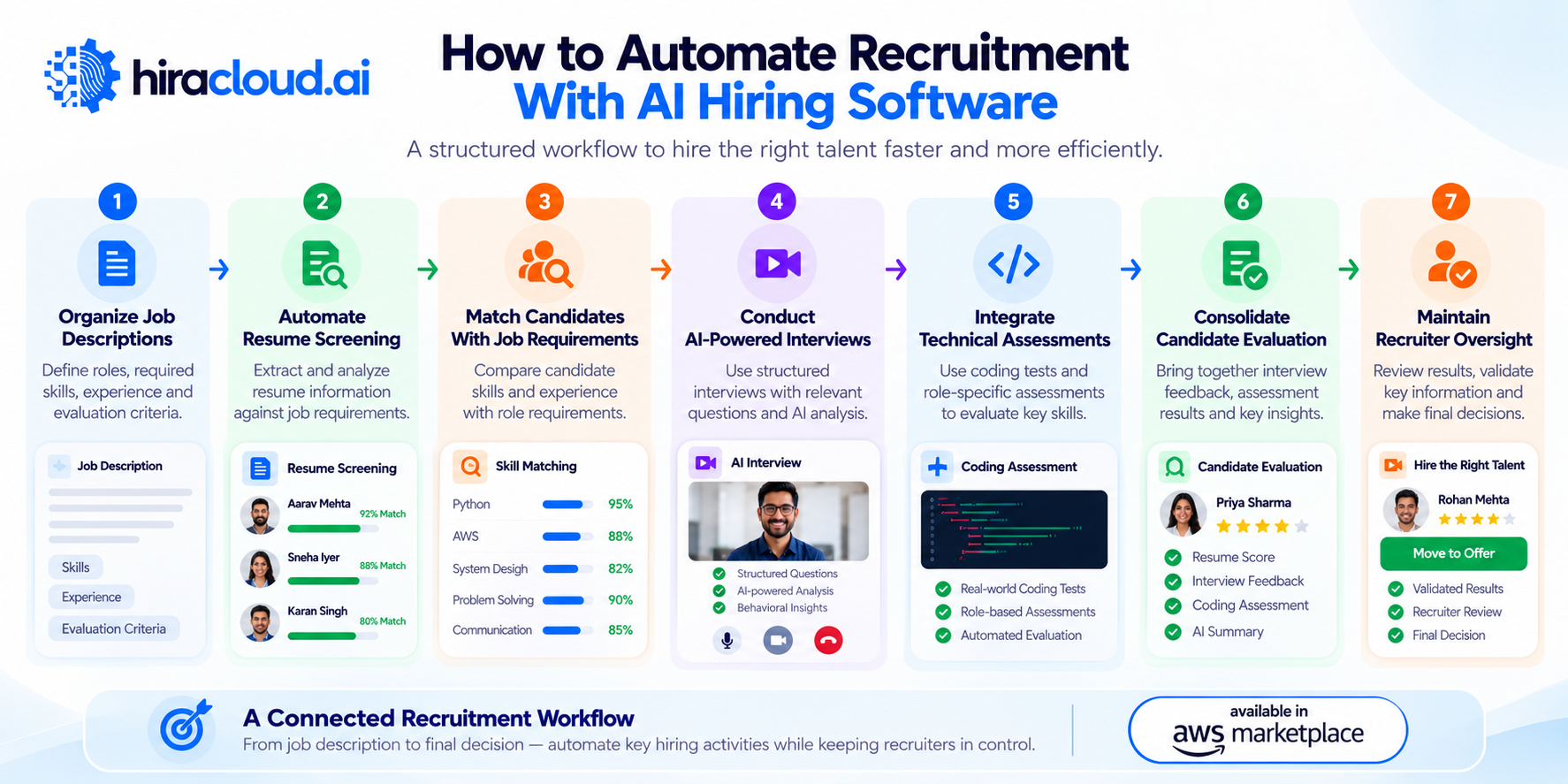
Automated recruitment works best when individual hiring activities are connected through a structured workflow. The exact process depends on the company's recruitment requirements and the capabilities of its chosen platform.
Organize Job Descriptions and Candidate Information
The recruitment process begins with defining the role, required skills, experience and evaluation criteria. AI-enabled systems can help organize job descriptions and candidate information so that recruiters can review relevant details within a consistent framework.
Clear job requirements are essential because the quality of candidate matching depends partly on how accurately the role is defined.
Automate Resume Screening
Resume screening helps recruiters review candidate qualifications, professional experience and relevant skills against job requirements.
AI hiring software can assist with extracting and organizing resume information, allowing recruiters to identify profiles that may warrant further evaluation. Screening criteria should be reviewed regularly to reduce the risk of overlooking suitable candidates or reproducing biases present in historical hiring data.
Match Candidates With Job Requirements
Candidate-to-job matching compares an applicant's capabilities with the competencies required for a position.
For technical recruitment, this may involve reviewing programming languages, cloud platforms, development frameworks, certifications and relevant project experience.
Effective matching should consider meaningful evidence of skills rather than relying exclusively on keyword frequency or previous job titles.
Conduct AI-Powered Interviews
AI-powered interview capabilities can support structured candidate interviews and organize responses for recruiter review.
Depending on the platform, organizations may use these capabilities to support initial screening or technical interview stages. Interview questions should remain relevant to the role, and candidates should receive appropriate information about how interviews are conducted and evaluated.
Integrate Technical Assessments
Technical recruitment often requires practical evidence of candidate capabilities. Coding exercises and other role-specific assessments can help organizations evaluate skills that may not be apparent from resumes alone.
Connecting assessments to the wider recruitment workflow helps teams review results alongside candidate experience, interview feedback and job requirements.
Consolidate Candidate Evaluation
After interviews and assessments, recruiters need a clear view of the available evidence. Consolidated evaluation workflows can organize relevant candidate information and help hiring managers compare applicants against established criteria.
AI-generated summaries or assessment signals should be treated as decision-support information rather than unquestionable conclusions.
Maintain Recruiter Oversight
The final stage involves reviewing the available information, validating assessment results and determining candidate suitability.
Recruiters and hiring managers should remain responsible for consequential hiring decisions. Human oversight helps organizations investigate discrepancies, consider individual circumstances and maintain accountability throughout the recruitment process.
Explore the HiraCloud AI product workflow to see how resume and job description intake, skill matching, interviews, coding assessments and candidate evaluation connect in one platform.
How AI Is Transforming Recruitment
AI-powered hiring is evolving beyond individual screening tools toward connected workflows that coordinate multiple recruitment activities.
Traditional recruitment processes often require recruiters to move between separate systems to review resumes, conduct interviews and examine technical assessment results. Integrated platforms can help organize these activities within a more coordinated environment.
Agentic AI hiring extends this approach by enabling AI agents to coordinate permitted tasks toward defined objectives, depending on the system's capabilities, integrations and configured permissions.
For example, an AI-enabled hiring workflow may organize candidate intake, compare skills against job requirements, coordinate interview stages and consolidate assessment information for recruiter review.
However, the level of automation varies across platforms. Organizations should evaluate actual capabilities, data protection safeguards, integration requirements and human approval mechanisms before adopting a solution.
How HiraCloud AI Supports Automated Recruitment
HiraCloud AI is an agentic hiring cloud designed for Global Capability Centers (GCCs), Offshore Delivery Centers (ODCs) and enterprise technical hiring teams.
Its connected capabilities support candidate intake, skills matching, interviews, technical assessments and evaluation within one hiring environment.
Resume and Job Description Intake
HiraCloud AI supports the intake of resume and job description information, helping organize candidate profiles alongside the requirements of a position. This provides a starting point for reviewing candidate experience and identifying relevant skills.
Bidirectional Skill Matching
Skill matching connects candidate capabilities with the skills required for a role. This helps recruitment teams evaluate potential alignment between job requirements and candidate profiles. For technical hiring teams, this approach supports a more skills-focused review of applicants.
L1 and L2 AI-Powered Video Interviews
HiraCloud AI provides L1 and L2 AI-powered video interview capabilities to support structured candidate interviews. These capabilities can form part of a connected recruitment workflow, helping teams organize interview-stage evaluations for recruiter review.
Proctored Coding Assessments
Technical roles frequently require practical evidence of programming and problem-solving skills. HiraCloud AI includes proctored coding assessments to support technical candidate evaluation within the hiring process. Assessment results should be interpreted alongside role requirements and other relevant candidate information.
Sentinel Integrity Monitoring
HiraCloud AI includes Sentinel integrity monitoring capabilities that provide additional assessment integrity signals. These include gaze tracking, lip-sync validation, liveness detection and deepfake signals. Such signals should be interpreted carefully and reviewed in context rather than treated as definitive proof of misconduct.
Consolidated Candidate Evaluation
HiraCloud AI brings relevant information from candidate intake, skill matching, interviews and coding assessments together within a connected hiring environment. By coordinating these activities, the platform supports recruitment teams in reviewing candidate information across multiple stages of technical hiring.
Explore the HiraCloud AI platform to understand how its hiring capabilities connect across the recruitment workflow.
Best Practices for Implementing AI Hiring Software
Selecting AI hiring software is only one part of building an effective recruitment process. Organizations should also establish clear operating practices.
- Define role-specific requirements: Establish the skills, qualifications and evaluation criteria required for each position before configuring recruitment workflows.
- Review assessment quality: Ensure interview questions and technical assessments are relevant to the job and consistently applied.
- Protect candidate information: Evaluate data access controls, retention policies, security measures and applicable privacy requirements.
- Monitor potential bias: Regularly review screening criteria and assessment outcomes to identify potentially unfair patterns.
- Maintain human oversight: Recruiters and hiring managers should review relevant evidence and retain responsibility for final hiring decisions.
- Measure recruitment performance: Track metrics such as time-to-hire, assessment completion rates, interview turnaround time and recruiter administrative workload.
- Evaluate integrations: Confirm that the platform supports the required workflows and integrations with the organization's existing recruitment systems.
These practices help companies assess whether AI hiring software is improving recruitment coordination while maintaining appropriate standards for candidate evaluation.
Frequently Asked Questions
What is AI hiring software?
AI hiring software uses artificial intelligence to support recruitment activities such as resume screening, skills matching, interviews, technical assessments and candidate evaluation. Its purpose is to help organizations coordinate hiring workflows and organize relevant candidate information.
How does AI hiring software automate recruitment?
AI hiring software can support resume analysis, candidate-to-job matching, structured interviews, technical assessments and consolidated evaluation. The level of automation depends on the platform's features, integrations, configured workflows and human approval requirements.
What are the benefits of AI hiring tools?
AI hiring tools can reduce repetitive administrative work, organize candidate information, support skills-based evaluation and help recruitment teams coordinate multiple hiring stages. Actual outcomes depend on implementation quality, recruitment requirements and the suitability of the selected technology.
Can AI hiring software conduct interviews?
Some AI hiring platforms support structured video interviews and organize candidate responses for review. Available features vary by platform, and organizations should establish appropriate evaluation criteria, candidate communication practices and human oversight.
Can AI hiring tools assess technical candidates?
Yes. Depending on the platform, AI hiring tools can support technical interviews, coding assessments and skills-based evaluation. Recruiters should interpret assessment results alongside role requirements and other relevant evidence.
Does AI hiring software replace recruiters?
AI hiring software is generally used to support recruitment activities rather than eliminate the need for recruiters. Human professionals remain important for evaluating context, communicating with candidates, investigating concerns and making informed hiring decisions.
Conclusion
AI hiring software offers organizations a way to coordinate recruitment activities, organize candidate information and support skills-based evaluation. From resume screening and candidate matching to AI-powered interviews and coding assessments, connected workflows can help recruitment teams manage increasingly complex hiring requirements.
For GCCs, ODCs and enterprise technical hiring teams, the right recruitment technology should combine relevant assessment capabilities, practical workflow integration, data protection and human oversight.
HiraCloud AI brings resume and job description intake, bidirectional skill matching, AI-powered interviews, proctored coding assessments, integrity monitoring and candidate evaluation together within one hiring environment.
Explore HiraCloud AI on AWS Marketplace
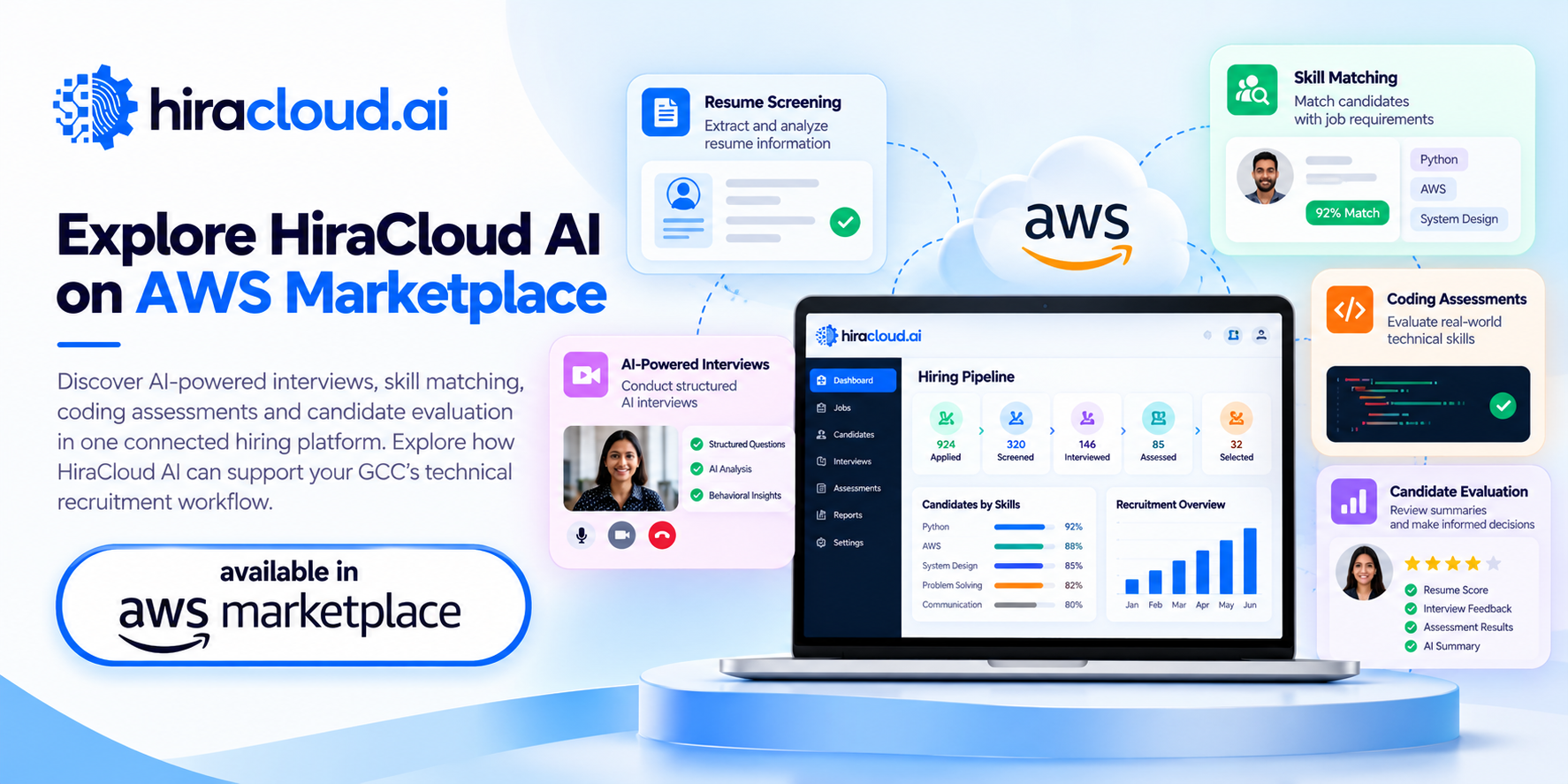
Discover AI-powered interviews, skill matching, coding assessments and candidate evaluation in one connected hiring platform. Explore how HiraCloud AI can support your GCC's technical recruitment workflow.